

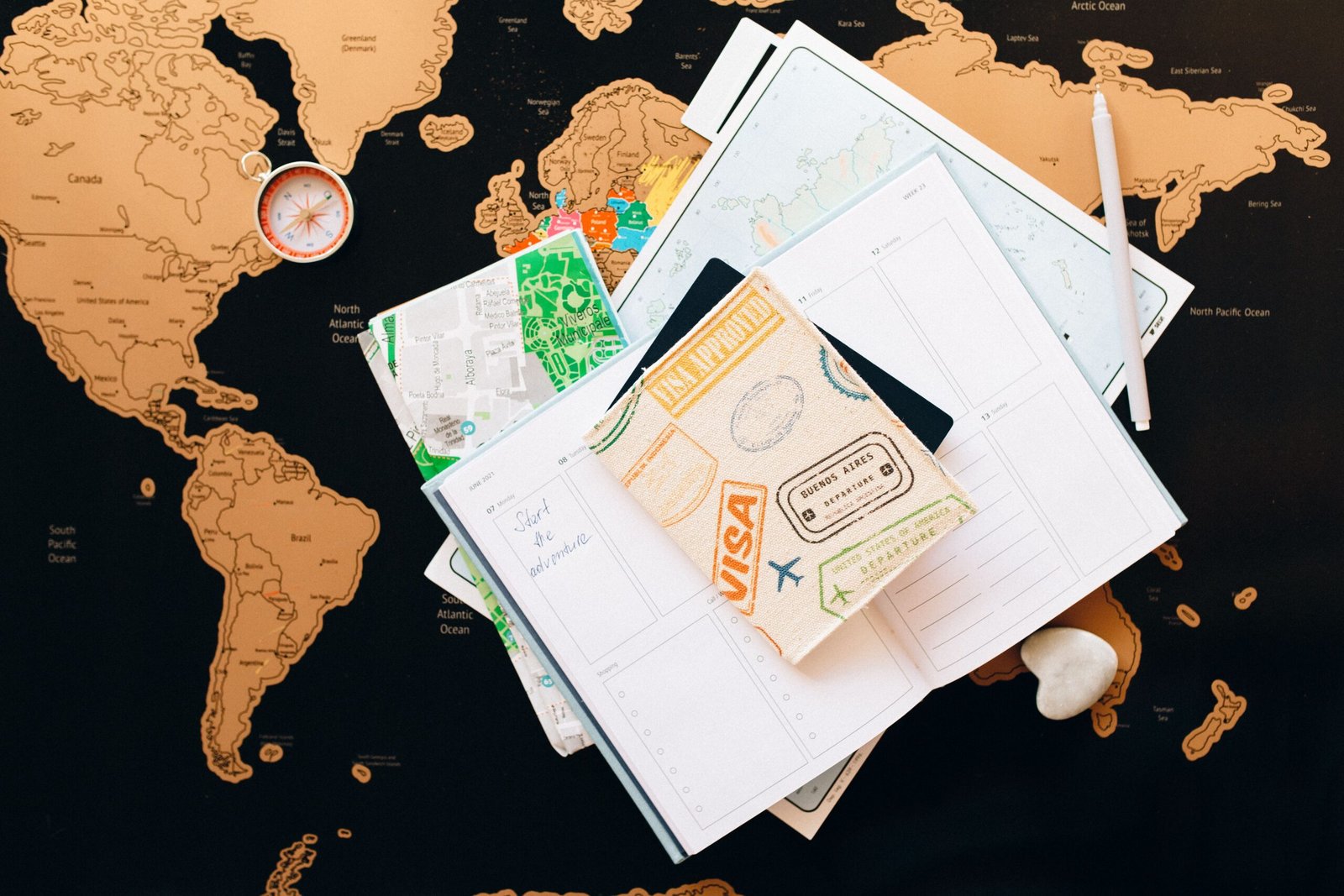
I used to think the phrase “digital nomad” meant someone who lived in a van and posted inspirational sunrise photos while their laptop balanced on a cooler. That was before my neighbor, a perfectly normal accountant named Dave who wears khakis and owns a leaf blower, told me he was moving to Portugal for a year. Not retiring. Not vacationing. Just packing his laptop, his standing desk attachment, and his very average salary, and setting up shop in Lisbon because his company finally admitted he never needed to be in a cubicle anyway.
Dave needed something I had never heard of: a digital nomad visa. It turns out that in the last few years, countries stopped seeing remote workers as tourists who overstayed their welcome, and started seeing them as long-term customers. If you have a job you can do from a laptop, and a paycheck that arrives in a bank account somewhere, you are now eligible for something that would have sounded like science fiction to your parents: a legal, year-long (sometimes two-year-long) pass to live in a foreign country without pretending to be on vacation.
As of 2026, the list of places offering these visas has gone from a short curiosity to a full menu. If you are thinking about joining Dave, or if you are just tired of looking at the same wall behind your webcam, here is what the world looks like right now for people who want to work somewhere that requires a passport.
The European Classics
Europe is where most Americans and Canadians look first, usually because they want cobblestones, decent coffee, and the feeling that they are living inside a movie. The good news is that Europe has fully embraced the digital nomad concept, though they often call it something fancier on the paperwork.
Portugal is still the heavyweight champion. The Portuguese digital nomad visa, sometimes called the D8, lets non-EU remote workers stay for one year, with the option to renew and eventually apply for residency if you fall in love with pasteis de nata. The income requirement is reasonable, usually around three thousand euros a month, though it shifts slightly depending on whether you are applying alone or with a family. Portugal wins because the internet is fast, the time zone lines up with the US East Coast, and the cost of living outside Lisbon is genuinely affordable. I have a friend who rents a two-bedroom apartment in Porto for less than she paid for a studio in Chicago. The downside is that Portugal became so popular that the immigration offices developed a reputation for long waits. Bring patience along with your laptop.
Spain launched its own digital nomad visa a few years back, and by 2026 it has become one of the most flexible options in Europe. You can stay for up to five years if you keep renewing, which is practically an eternity in nomad terms. Spain requires you to prove you have been working remotely for at least three months before you apply, and they want to see roughly two thousand euros a month in income. The catch is that if you earn your money from Spanish clients, you might owe local taxes, which is a detail that surprises people who assume “remote” means “invisible to tax collectors.” Still, the ability to base yourself in Barcelona or Valencia, work until three, then walk to the beach is hard to argue with.
Greece has been quietly perfecting its offering, and the Greek digital nomad visa now allows stays of up to two years with the possibility of extending. The income threshold sits around thirty-five hundred euros a month, which is higher than some competitors, but Greece sells itself on lifestyle. If you have ever tried to have a bad day while looking at the Aegean Sea, you know the appeal. Islands like Crete and Rhodes have built actual coworking communities, not just cafes with unreliable Wi-Fi. Athens is energetic and affordable. The bureaucracy moves at a Mediterranean pace, but the gyros are worth the wait.
Croatia was one of the first countries to use the actual words “digital nomad visa,” and they are still in the game. The Croatian program offers up to a year, and you cannot extend it immediately; you have to leave for six months before reapplying. That rule annoys people who want to nest, but Croatia makes up for it with a very straightforward application process and a tax break. If you qualify, you do not pay local income tax on your foreign-earned money. That is a big deal. Zagreb is underrated, Split is gorgeous, and the islands are full of people who look like they are on a yacht even when they are just on a Zoom call.
Estonia, the tiny Baltic nation that basically invented digital government, still offers its visa for remote workers. It is not the cheapest option in Europe, but if you value efficiency, Estonia is the place where you file your taxes in three minutes and vote from your phone. Tallinn is cold, compact, and strangely charming. The visa lasts a year. The internet is faster than whatever you have at home. I promise.
The Affordable Sun Belt
Not everyone can afford European prices, and not everyone wants to wake up at six in the morning to match US time zones. For those people, there is a whole belt of countries where your dollar stretches, the weather is warm, and the visa process feels more like a welcome mat than an obstacle course.
Thailand has finally gotten its act together. After years of forcing digital nomads to do visa runs or use confusing education visas, Thailand now offers the Destination Thailand Visa, which is built for remote workers, retirees, and anyone who wants to stay long-term without pretending to learn Thai cooking. It allows stays of up to one hundred and eighty days per entry, renewable, and the financial requirement is surprisingly gentle. You need to show proof of funds or a steady income, but they are not asking for Silicon Valley money. Chiang Mai is still the unofficial capital of digital nomad life, with coworking spaces that look like jungle treehouses and apartments that cost less than a parking space in San Francisco. Bangkok is chaotic but connected. The islands are slow and beautiful. The only warning is the heat, which is not a joke. Your laptop will sweat.
Malaysia runs the DE Rantau program, which is basically a branded digital nomad visa with a name that sounds like a beach resort because it kind of is. It is valid for up to two years, renewable, and it covers not just peninsular Malaysia but also the jungles of Borneo if you want to get exotic. Kuala Lumpur has skyscrapers and bubble tea on every corner. Penang has street food that will ruin all other food for you. The internet is excellent. The cost of living is low. The visa requires an annual income of roughly twenty-four thousand US dollars, which is accessible for most remote professionals.
Colombia entered the chat a few years ago and has not left. The Colombian digital nomad visa allows stays of up to two years. The income requirement is around nine hundred dollars a month, which is almost embarrassingly low for anyone with a real remote job. Medellin is the hub, with spring weather year-round and a growing community of foreigners who came for a month and stayed for two years. Bogota is colder and more formal. Cartagena is hot and colorful. Colombia still carries an outdated reputation for danger, but the visa office is friendly, the coffee is world-class, and the apartments come with balconies you actually use.
Mexico does not technically call its program a digital nomad visa, but the temporary resident visa functions exactly like one. If you can show a monthly income of around two thousand dollars or a savings balance that hits a modest threshold, you can get a visa that lasts one year and renews for up to four. Mexico is the easy choice for Americans because it is close, the food is familiar in the best way, and the cities are varied. Mexico City is enormous and cultured. Oaxaca is slow and artistic. Playa del Carmen is full of people who work until noon and snorkel until dinner. The time zones align perfectly with the US. The only risk is that you might never leave.
Indonesia, specifically Bali, has a visa that functions for remote workers, though the rules have shifted back and forth so many times that you need to check the current month before booking. As of 2026, the B211A business visa and the Second Home Visa are the main pathways, depending on your income level. Bali is the place that invented the laptop-by-the-pool aesthetic. Canggu and Ubud are packed with coworking spaces, healthy cafes, and people who describe themselves as “spiritual entrepreneurs.” It is not for everyone. The traffic is bad. The humidity is aggressive. But if you want to live somewhere that feels like a permanent vacation, Bali is still the global leader.
The Underdogs and Newcomers
For every Portugal or Thailand, there is a country you have not thought of yet that is quietly offering a better deal.
Albania does not get enough credit. The Albanian digital nomad visa is valid for up to one year, renewable, and the income requirement is shockingly low. Tirana is a city of bright colors and bad driving, but it is safe, affordable, and surrounded by mountains and beaches that rival anything in Greece. The Wi-Fi is good. The seafood is fresh. The rent is so low that you will feel like you are getting away with something.
Montenegro launched its program recently, and it is designed to attract people who want the Adriatic coast without Croatian prices or Italian crowds. Kotor looks like someone dropped a medieval village into a fjord. The visa lasts two years. The tax situation is favorable. It is small, which means you can see the whole country on weekends, but that is part of the charm.
Serbia has become a sleeper hit. Belgrade is one of the most underrated cities in Europe, full of energy, nightlife, and surprisingly good remote work infrastructure. The Serbian digital nomad visa allows stays of up to two years. The cost of living is a fraction of Western Europe. The people are direct and warm. The coffee culture is serious. If you want to feel like you have discovered something before everyone else, Serbia is waiting.
Namibia is the wild card. The Namibian digital nomad visa is one of the few in Africa, and it lets you stay for up to six months. The income requirement is modest. The country is stunning in a way that makes you forget to check your email. Windhoek is small but functional. The real draw is the landscape: red deserts, skeleton coasts, wildlife that wanders past your window. The time zone is manageable for Europe. For Americans, it is a stretch, but if you are a freelancer who sets your own hours, Namibia offers something no coffee shop in Lisbon can match: actual silence.
Cape Verde, off the coast of West Africa, has a remote working program that feels like a secret. The islands are warm, laid-back, and visually spectacular. The visa process is simple. The cost of living is low. It is not a place for people who need constant stimulation, but if your idea of a good workday ends with a swim in water that looks like a screensaver, Cape Verde deserves a look.
What They Do Not Put on the Brochure
A digital nomad visa is not a magic portal to a stress-free life. It is a piece of paper that lets you stay legally while you figure out the rest. There are things the tourism boards forget to mention.
Taxes are the big one. Some countries, like Croatia and Greece, offer tax breaks or exemptions for the first year or two. Others expect you to pay local taxes if you stay long enough to become a tax resident, which usually kicks in after one hundred and eighty-three days. The rules are complicated, and they change. If you are staying a full year, talk to an accountant. Do not rely on a Facebook group for tax advice. I have seen people celebrate their new visa on Monday and panic about a local tax bill on Tuesday.
Healthcare is another quiet concern. Most digital nomad visas require proof of health insurance, which is reasonable, but the quality of local care varies wildly. Portugal and Spain have excellent public systems, though access for visa holders depends on local rules. Thailand has great private hospitals in Bangkok but limited options on remote islands. Namibia has evacuation insurance for a reason. Buy real insurance, not just the cheapest policy that satisfies the visa form. Read the fine print about repatriation.
Then there is the loneliness. A visa gets you into the country. It does not get you friends. The Instagram version of digital nomad life shows people laughing at beachside coworking spaces, but the reality often involves eating dinner alone in a city where you do not speak the language yet. Some places, like Chiang Mai and Lisbon, have built-in communities because so many nomads have already paved the way. Others, like Montenegro or Namibia, require more effort. You have to join groups, go to meetups, say yes to things. The visa is the easy part. Building a life is the project.
The Reality Check
If you are reading this and thinking, “I could do that,” you probably can. The barriers are lower than ever. You do not need to be a tech genius or a social media influencer. You need a remote job, a stable internet connection, and enough savings to cover the application fees and a few months of rent while you get settled. That is genuinely it.
But you also need to be honest about what kind of traveler you are. If you love routine, deep friendships, and knowing exactly where to find your favorite cereal, nomad life will be hard. If you get anxious when the Wi-Fi hiccups during a video call, living in a country where the power sometimes flickers will test you. If you are running from something rather than toward something, a new visa will not fix it. It will just give you a different view while you work through the same stuff.
On the other hand, if you are curious, adaptable, and slightly bored of your current view, the world is holding the door open. Portugal wants you. Thailand wants you. Albania, for goodness sake, wants you. They have built the paperwork. They have set the income thresholds. They have accepted that the future of work does not require a commute.
Dave, my accountant neighbor, has been in Lisbon for eight months now. He sends me photos of his lunch, which is always some kind of fish I cannot pronounce, eaten at a cafe where the bill is smaller than his old parking fee. He says the hardest part was not the visa application or the language barrier or even the time zone. The hardest part was deciding to go. Once he submitted the paperwork, the rest was just logistics.
That sounds about right. The visa is just permission. The real leap is believing that your life can happen somewhere else, at a kitchen table in a city you have not visited yet, while your paycheck keeps landing in the same account. In 2026, that is not a fantasy. It is an option on a menu, available to anyone brave enough to order it.