

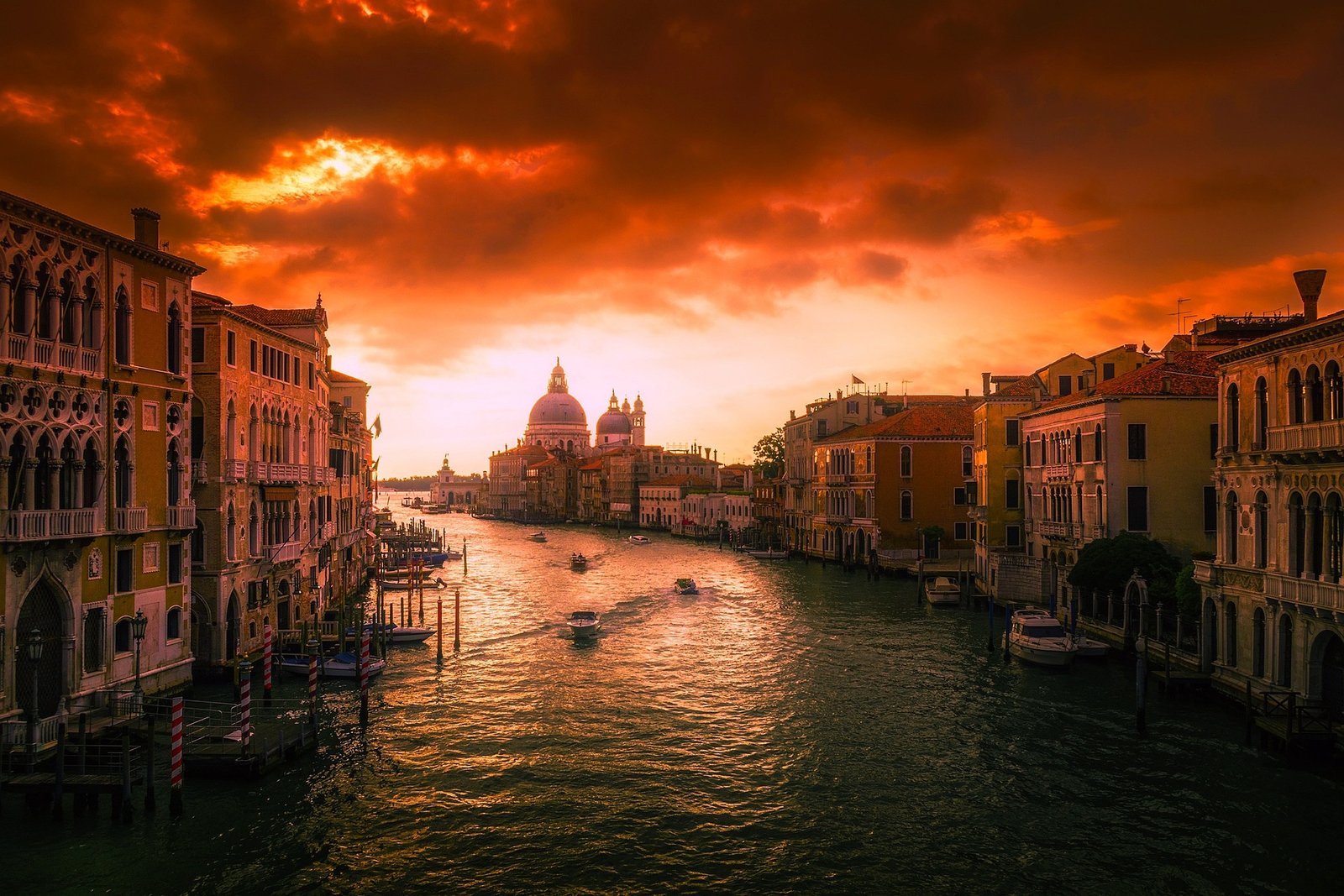
The daydream is intoxicating. You’re sipping an Aperol Spritz in a Venetian piazza one week, then hunting for vintage vinyl in a Berlin flea market the next, before finding yourself hiking the rugged cliffs of the Amalfi Coast. A multi-city trip is the ultimate travel fantasy—a “greatest hits” album of experiences that turns a simple vacation into an epic saga. It’s the antidote to the monotony of daily life, a promise of variety, culture, and a cascade of new sensations.
But then, the daydream curdles. You open a flight search engine, look at a map, and your heart sinks. The logistics seem like a tangled knot, and the potential cost feels like a financial black hole ready to swallow your savings. The fear is real: a multi-city odyssey, for all its romance, is a masterclass in how to hemorrhage money. Different currencies, constant movement, peak-season premiums, and the seductive “I’m only here once” mentality can inflate your budget to a ruinous size.
It doesn’t have to be this way. The art of the multi-city trip isn’t about being cheap; it’s about being strategically smart. It’s about designing a journey where the richness of the experience isn’t measured by the thickness of your wallet but by the depth of your memories. It’s entirely possible to crisscross a continent or explore a region’s diverse cities and still return to a bank account that isn’t on life support.
This is your blueprint. We’re going to deconstruct the entire planning process, from the first seed of an idea to the moment you return home, and inject it with proven, hard-won strategies to keep your spending on a tight leash without sacrificing the soul of your adventure. Forget deprivation; this is about smart allocation, so you can spend your money on what truly matters—the experience.
Phase 1: The Blueprint – Radical Honesty in the Conceptual Stage
The foundation of a budget-friendly multi-city trip isn’t built on a booking site; it’s built on a ruthless, almost brutal, sense of self-awareness. Before you even type an airport code into a search bar, you must confront the silent budget-killers born from good intentions and Pinterest boards.
The Tyranny of the “Must-See” List
Every traveler has one. That list of iconic landmarks, trendy neighborhoods, and viral food spots was compiled from Instagram reels and Top 10 articles. The first step to saving money is to interrogate this list mercilessly. Why is a place on it? Because you have a genuine, burning passion to see it, or because you feel a vague social obligation?
A multi-city trip is not a checklist to be conquered. A “must-see” attraction often comes with a hefty price tag (entry fees, overpriced food nearby, and transport costs) and a draining crowd. For every over-hyped, expensive experience, there’s an alternative that is cheaper, more authentic, and less stressful. Skip the overpriced, underwhelming canal ride in a tourist-trap city and instead, find a neighborhood taverna where you can spend that money on a four-course meal. The money you save by skipping one “iconic” but inauthentic experience can fund a full day of genuine exploration in your next city. Your trip, your rules.
The Geography Test: Is Your Route Logical?
This is the most expensive mistake novice planners make. They get seduced by city names. “We’ll start in London, then pop over to Prague, then down to Rome, and maybe finish in Barcelona!” This pinball-wizard route is a financial catastrophe. You’re at the mercy of expensive, often non-negotiable point-to-point flights, and you’re hemorrhaging time in airports.
A smart route is a geographically coherent route. Think in clusters and linear paths, not star-bursts. A string of cities connected by affordable trains or a single, cheap flight corridor is the goal.
- The Linear Land Route: The classic example is a Eurail-style journey: Rome-Florence-Venice-Ljubljana-Vienna. You move in one smooth direction, with each leg being a relatively short and inexpensive train ride booked in advance.
- The Hub-and-Spoke: Establish a base in a major, well-connected city with budget airline hubs (like Milan, Kuala Lumpur, or Mexico City). From there, you can take incredibly cheap flights or buses on day-trips or short 1-2 night forays to surrounding cities, leaving your main luggage at a central hostel or hotel.
- The Budget Airline Loop: This works brilliantly in Europe and Southeast Asia. Identify a city served as a major hub for a low-cost carrier (e.g., Ryanair’s bases in Dublin or Stansted, or AirAsia in Kuala Lumpur). Use that hub as your arrival and departure point, and book a series of cheap, one-way flights out to other cities and back, creating a circuit.
A one-way flight from London to Prague booked last-minute could cost €200. A pre-booked train from Florence to Venice could cost €15. Multiply that logic over four or five legs, and geographical sanity becomes your single biggest savings tool.
Phase 2: The Booking Blitz—Strategy Over Spontaneity
This is where the theory meets the spreadsheet. The booking phase is a high-stakes chess match against dynamic pricing algorithms. Your weapons are flexibility, incognito mode, and a contrarian mindset.
The Open-Jaw Secret
This is non-negotiable. Do not, under any circumstances, book a standard round-trip ticket into and out of the same city. You must book an “open-jaw” or multi-city ticket. This means you fly into City A and fly home from City Z.
Imagine a trip from Paris to Amsterdam to Berlin. A round-trip ticket to Paris forces you to waste a full day and at least €100-€150 on a train or budget flight back from Berlin to Paris just to catch your flight home. An open-jaw ticket—flying into Paris and out of Berlin—might cost $50-$100 more on the front end but saves you a day of travel and the hidden costs of the return leg. The time saved is just as valuable as the money.
Train vs. Plane: A Deceptive Calculus
A €19 flight looks undeniably better than a €50 train ticket. But the true cost of flying is a stealthy beast. You must factor in the cost of transport from the city center to an airport that’s often an hour away (often €10-15 each way), the time lost to security and boarding, and the soul-crushing restrictions on luggage. Budget airlines are masters of ancillary fees. That €19 ticket becomes a €79 ticket the moment you add a modest carry-on bag.
Conversely, train stations are almost always in the heart of the city. You walk on with your bags, you walk off, and you’re already in the center of the action. The premium you pay for the train is often a direct purchase of time, convenience, and predictability. For any journey under five or six hours, a train is almost always the superior and, when all costs are accounted for, more economical choice. Book these directly with the national rail operator (like Trenitalia, SNCF, or Deutsche Bahn) months in advance for the deepest “super saver” discounts.
The Layover Lure
For long-haul flights, don’t just search for the shortest itinerary. Actively program extended layovers into your search. Many airlines (Icelandair, TAP Air Portugal, Turkish Airlines, and Qatar Airways) offer free or minimal-cost stopover programs. You can get a “free” 1-to-4-day trip to a city like Reykjavik, Lisbon, Istanbul, or Doha for the same price as a direct connection. This isn’t just saving money on a flight to that city; it’s adding an entire extra dimension to your trip for the cost of a few meals and a hostel bed.
Phase 3: The Art of the Low-Cost Sleeperoo
Accommodation is a relentless, nightly drain on your funds. This is the line item that requires a paradigm shift. A hotel room is not a home; it’s a pod for sleeping, washing, and safely storing your passport. Treat it as such, and you unlock a world of savings that can be redirected to experiences.
The Kitchen Is Your Wallet’s Best Friend
For multi-city travel, the humble hostel kitchen or a basic Airbnb/booking.com apartment with a kitchenette is not an amenity; it’s a financial superweapon. Eating out for three meals a day is an express train to bankruptcy. The math is devastatingly simple. A basic, sit-down breakfast of coffee and a pastry in a city like Stockholm or Zurich can easily run €12-€15. A week of that is nearly €100. For that price, you can buy gourmet coffee, fresh bread, local cheese, fruit, and yogurt from a supermarket and feast like a king every morning for a week.
The strategy is to shift your meal allocation. Make breakfast a non-event in your accommodation. Picnic lunches from local markets and bakeries are not just cheap; they are one of the great joys of travel—a fresh baguette, a wedge of brie, and a tomato eaten on a park bench is a far more authentic experience than a tourist-menu lunch. Save your meal budget for a single, fantastic dinner, allowing you to enjoy the local cuisine without the crushing daily cost. A €5 breakfast and a €7 picnic lunch mean you can splurge on a €30 dinner without breaking the bank.
Redefine the “Room.”
A private, en-suite hotel room in a city center is the most premium product in the accommodation market. You don’t need it. Consider the alternatives:
- Hostel Private Rooms: The ultimate travel hack for couples or duos. You get the privacy and security of a hotel room with the kitchen, common area, and priceless local knowledge of a hostel, often at half the price of a budget hotel.
- Monasteries and Convents: In cities like Rome and Florence, religious orders rent out simple, impeccably clean, and deeply peaceful rooms, often for a fraction of the cost of a hotel. The catch is often a modest curfew, a small price for supreme silence and central location.
- Home-Stays and Guesthouses: Renting a room in a local’s home via platforms like Airbnb (the “private room” filter is your friend) injects money directly into the local economy and often provides a kitchen. The host’s advice is a bonus you can’t buy.
Phase 4: The On-the-Ground Game Plan – Urban Survival Skills
You’ve arrived. The booking is done, but the daily drip-drip of expenses will make or break your budget. This is about moving through a city like a local, not a walking ATM.
Public Transit Is the Only Transit
When you emerge from a train station, a taxi can cost €30-€40 to your lodging. A 72-hour public transport pass for unlimited buses, trams, and metros might cost €15-€20 and doubles as a sightseeing tour. The decision is made before you even arrive. Download the city’s official transit app (Citymapper is a global godsend). Buying a multi-day pass immediately eliminates transport stress and allows you to hop on and off at will, turning the entire city into an accessible playground. To save even more, ask yourself: is this a walkable city? In many historic European centers, the walk from the Colosseum to the Vatican is a core part of the experience.
The Free Walking Tour Economy
On your first morning in a new city, join a “free” walking tour. These exist in virtually every major city and are run by passionate, charismatic locals. They work on a tips-only basis. The economic psychology is brilliant: you get a world-class 2-3 hour orientation to the city, its history, and its hidden corners. You end up paying what you felt the tour was worth (usually €10-€15 per person), which is still a fraction of a commercial tour’s price. More importantly, the guide is a goldmine of budget-conscious recommendations for eating, drinking, and further exploring, far from the tourist traps. This single activity should be the opening ceremony of every city on your itinerary.
The City Tourism Card Calculus
The 48 or 72-hour city tourism card is a seductive offer: “Unlimited access to 50 museums and transit!” Do not buy it reflexively. Do the math. It only makes sense if its cost is less than what you would naturally spend on a-la-carte entries and transport. Many cards are padded with obscure, uninteresting museums. If the card is €70 but you only desperately want to see three main sites that total €50 in entry fees, you’ve wasted €20. Only buy the card if it perfectly aligns with your pre-existing “must-see” list and your planned transit usage. Never let the card dictate your itinerary to “get your money’s worth.”
Phase 5: The Mindset Shift—The Evolving Philosophy of Budget Travel
All the spreadsheets and apps in the world won’t save you if your internal philosophy isn’t calibrated. Overspending is often an emotional act, a response to FOMO, fatigue, or a transactional view of travel.
The “Splurge of the Trip” Singularity
Constant, low-grade scrimping is miserable and unsustainable. The antidote is the deliberate, pre-planned “Splurge of the Trip.” At the beginning of your planning, decide on one single, non-negotiable, blowout experience. It could be a Michelin-starred lunch in San Sebastian, a sunrise hot air balloon ride over Cappadocia, or a front-row ticket to an opera in Vienna.
By consciously allocating a significant chunk of your budget to this one event, you give yourself the psychological freedom to be frugal everywhere else. That €15 hostel dinner isn’t a sign of poverty; it’s a strategic choice to fund your hot air balloon. You transform the trip’s narrative from one of constant restriction to one of deliberate allocation, where every saving is a direct contribution to a magnificent future moment. The memory of that one splurge will outshine the hundred small things you didn’t buy.
The “Decoy City” Strategy
This is a counter-intuitive concept. In every region, there are “A-list” and “B-list” cities. The A-listers—Venice, Amsterdam, Paris, and Barcelona—are in a perpetual state of peak pricing. Accommodation, food, and activities carry a staggering premium simply for the honor of being there.
The “Decoy City” strategy involves identifying a less-famous, B-list city that offers a similar cultural vibe for half the price. Instead of the throngs of Florence, consider the stunning, art-filled, and deeply delicious Bologna, just a 35-minute train ride away. Instead of the crushing expense of Dubrovnik, the town of Kotor, Montenegro, offers a shockingly similar medieval stone-walled, bay-side magic at a fraction of the cost. Bologna and Kotor are not “lesser than”; they are more relaxed and more authentic and leave your budget intact. You get the essential cultural feeling of the region without the financial body blow.
Slow Down to Save Up
The ultimate multi-city budget killer is speed. The faster you move, the more you spend per hour on transport, and the more you feel pressured to consume because your time is limited. This leads to frantic, expensive decisions.
The most profound way to save money is to decelerate. Stay longer in fewer places. A five-city-in-10-days trip is a blur of train stations and check-in desks. A three-city-in-12-days trip is an experience.
Staying in one place for four or five nights unlocks deep discounts: weekly apartment rental rates, the ability to do laundry (packing light saves airline fees), and the opportunity to shop and cook in a local market. You shift from being a consumer of a city to a temporary resident. You find the €2 coffee stand the locals use, the affordable lunch spot off the main square, and the free park where everyone gathers for sunset. This deeper connection, born of moving more slowly, is not just richer in memory; it’s fundamentally cheaper. You trade breadth for depth, and your wallet is the first to breathe a sigh of relief.
Putting It All Together: A Concrete Example
Let’s visualize a 14-day trip through Central Europe for two people, using these principles.
The Itinerary: Fly into Budapest (3 nights) → Night train to Krakow (3 nights) → Train to Prague (4 nights) → Train to Berlin (4 nights) → Fly home from Berlin.
- Flight Strategy: An open-jaw flight from your home to Budapest, returning from Berlin. Actively seek a potential 2-day stopover in a hub city like Zurich or Munich on the way in, for free.
- Transport Strategy: All city-to-city legs are by pre-booked, super-saver train tickets (approx. €20-€30 per person). A night train from Budapest to Krakow saves on a night’s accommodation. Within cities, 72-hour transit passes eliminate all taxi costs.
- Accommodation Strategy: Private rooms in highly-rated hostels with guest kitchens. Average cost: €40-€50 per night for the room.
- Daily Flow Strategy: Every morning starts with a €4 breakfast from the hostel kitchen. Lunch is a €7 feast from a market or grocery store. The daily budget is focused on one key activity (a museum, a historic site) and a single, lovely dinner at a non-touristy restaurant (€20-€30 per person). Every city begins with a free walking tour.
- Splurge Singularity: The single planned splurge is a night at a classical music concert in a historic Prague church (€40 per ticket).
- The Result: Instead of a frantic, €4,000+ debt-inducing scramble, this trip becomes a controlled, deeply enriching €1,800-€2,200 per person masterpiece—including long-haul flights—where every euro was spent intentionally.
Planning a multi-city trip without overspending isn’t a superpower; it’s a discipline. It’s the triumph of geographic logic over Instagram-driven fantasy. It’s choosing a picnic in a park over a tourist-trap café, a local train over a budget airline’s hidden fees, and the profound richness of slow travel over a frantic checklist.
The goal is not to return with a suitcase full of things but with a mind full of sharp, vivid memories. It’s the smell of fresh bread from a Krakow bakery you found on your own, the unexpected kindness of a Berlin hostel owner, and the profound silence of a Budapest thermal bath at dusk. These are the moments that cost nothing but require a plan. The world is a sprawling, magnificent book. With this blueprint, you can read many of its chapters without writing a check your future self can’t cash. Go, journey far, and travel brilliantly