

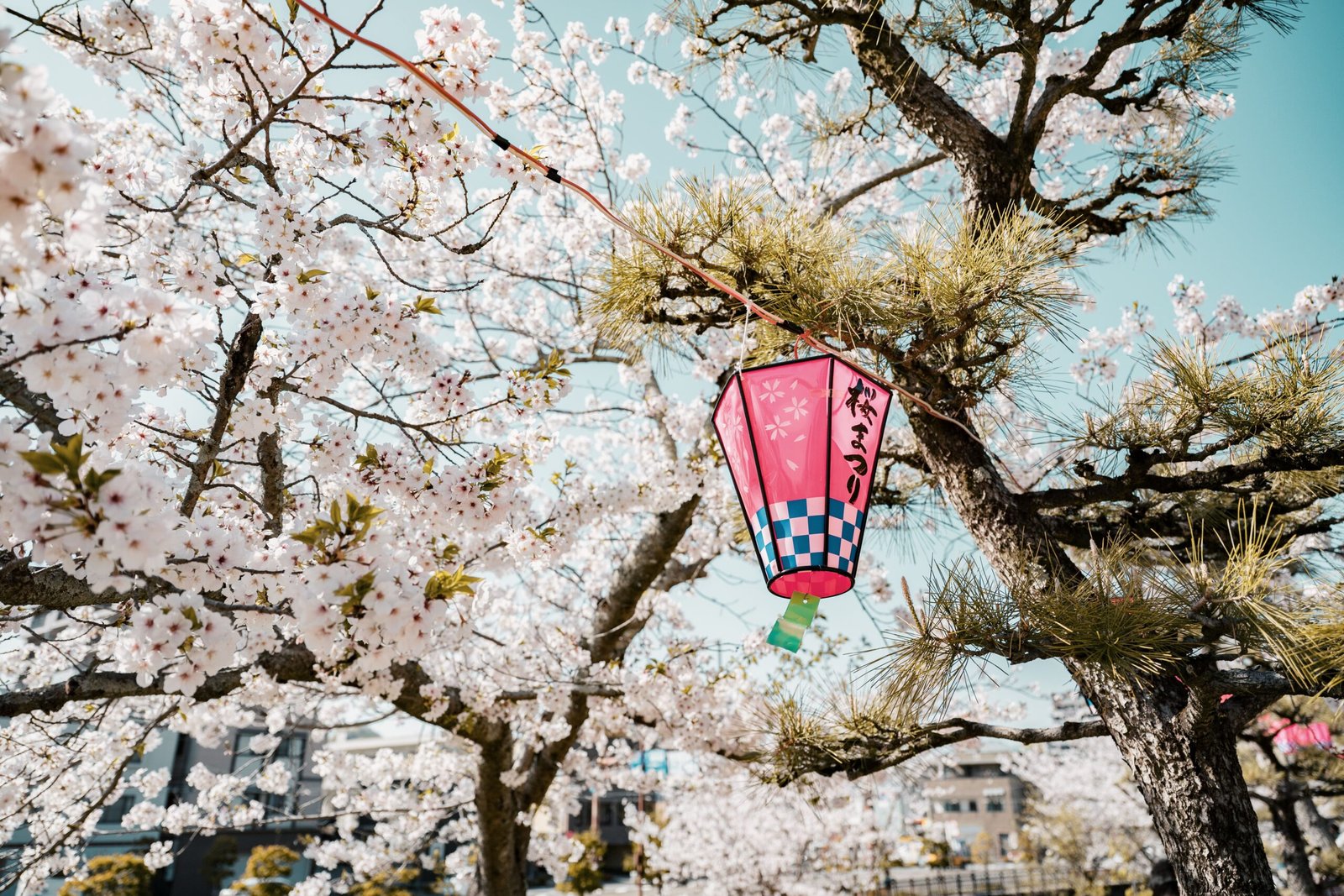
I thought I was prepared. I had watched the YouTube videos. I had read the Instagram captions. I had even bought a light pink scarf because some algorithm convinced me it would photograph well against a backdrop of soft white petals. I arrived in Tokyo on a Thursday in late March, checked into my hotel in Shinjuku, and walked to Shinjuku Gyoen the next morning with the confidence of a person who had done her research.
What I was not prepared for was the feeling. Not the beauty, exactly. I expected beauty. I had seen the pictures. I was ready for pretty. What flattened me, what actually stopped me in the middle of a path and made me forget to take my phone out of my pocket, was the impermanence of it all. The cherry blossoms were at their peak, which meant they were already dying. Every gust of wind sent a flurry of petals tumbling through the air like snow in reverse, and the Japanese families sitting on their blue tarps beneath the trees looked up not with sadness but with a kind of tender acceptance. They had brought bento boxes and beer and small children in tiny suits. They were having a picnic inside a metaphor, and they knew it.
That is the thing about cherry blossom season in Japan. It is not just a pretty time to visit. It is a national meditation on the fact that nothing lasts. The Japanese call this mono no aware, the pathos of things, and you do not need to understand the words to feel the weight of them when you are standing under a tree that was perfect yesterday and will be bare by next week. If you are planning to go, and I think you should, you need to know that you are not just booking a vacation. You are signing up for a lesson in transience, taught by flowers, crowds, and the occasional drunk office worker singing karaoke under a moonlit branch.
The Timing Will Make You Crazy, and That Is Part of It
Cherry blossom season is not a fixed date on a calendar. It is a moving target, a meteorological guessing game that consumes the entire country every February like a slow-building fever. The Japan Meteorological Corporation releases forecasts starting in January, tracking a theoretical “blossom front” that moves from south to north as the weather warms. Okinawa gets its flowers in January. Tokyo and Kyoto usually see peak bloom in late March or early April. Hokkaido waits until May. The forecasts are updated constantly, and by March they are updated daily, then twice daily, then with the manic frequency of a stock ticker during a crash.
I spent two weeks refreshing a blossom forecast website like it was delivering election results. I had booked my flights six months in advance because that is what the guidebooks told me to do, and then I spent the final month before departure in a low-grade panic that I had chosen wrong. What if I was too early? What if I was too late? What if a freak cold snap sent the flowers back to sleep or a heatwave made them explode and vanish before I landed?
Here is the truth I learned. You cannot win this game perfectly. You can only place a good bet. If you are aiming for Tokyo or Kyoto, late March to early April is your window. If you want to follow the bloom northward like a floral groupie, you can start in Kyushu in mid-March and end in Tohoku by mid-April. But the weather is the weather, and the flowers do not care about your itinerary. My advice is to build flexibility into your trip. Do not plan your entire Japan experience around one afternoon under one specific tree. Plan for a season, not a moment. And if you miss peak bloom by a few days, do not despair. The falling petals are often more beautiful than the full flowers anyway. There is a word for that too: hanafubuki, the flower blizzard. It is the grand finale, and it is worth seeing.
Where to Go Without Losing Your Mind
Everyone will tell you to go to Ueno Park in Tokyo. They are not wrong, exactly. Ueno Park is iconic. It has a thousand cherry trees, a zoo, museums, and a pond that reflects the blossoms like a mirror. It also has approximately one million people on a sunny Saturday, all of them trying to take the exact same photo. I went once. I got jostled by a man with a selfie stick the size of a fishing rod. I ate an overcooked yakitori stick from a vendor who had clearly given up on quality control in the face of demand. I left after an hour, overwhelmed and slightly grumpy.
The lesson is that cherry blossom season in Japan rewards the person who is willing to walk a little further, wake up a little earlier, or get on a train that goes beyond the obvious.
In Tokyo, skip the midday madness of Ueno and go to the Meguro River instead. The trees line the water for nearly a kilometer, and at night they are illuminated with paper lanterns so the petals glow pink against the dark water. It is magical and crowded, but the crowd moves in a slow river of its own, and the narrow path means you are never stuck in one spot. Or try the grounds of the Imperial Palace East Garden, which is free, spacious, and full of locals rather than tour buses. If you really want space, take the train out to Showa Kinen Park in Tachikawa. It is forty minutes from central Tokyo and has vast lawns where you can actually lie down without becoming part of a stranger’s family photo.
Kyoto is where the cherry blossom industrial complex reaches its peak. Maruyama Park is famous for its giant weeping cherry tree, which is lit up at night and surrounded by food stalls and revelers. It is beautiful and chaotic and absolutely worth seeing once, preferably with a cup of hot sake in your hand. But the Philosopher’s Path, a stone walkway that runs along a canal lined with hundreds of cherry trees, is where you go to understand why poets have been writing about this for a thousand years. Go at dawn. I mean actually at dawn, when the light is gray and the path is empty except for the occasional jogger and one very dedicated photographer who has set up a tripod in the middle of a bridge. The blossoms overhang the water. A petal falls. You hear it land. That is the Kyoto you came for.
If you want to feel like you have discovered something, go to Kakunodate in Akita Prefecture, a small samurai town in the north where ancient weeping cherry trees line the streets of old wooden estates. Or go to Mount Yoshino in Nara Prefecture, where thirty thousand trees cover the mountain in layers of white and pale pink, and pilgrims have been hiking the paths for centuries. Or Hirosaki Castle in Aomori, where the moat fills with fallen petals so thick it looks like the castle is floating on a cloud of pink cotton candy. These places require more effort to reach. That is why they are better.
Hanami: The Art of Sitting Under a Tree and Drinking Beer
Hanami literally means flower viewing, but in practice it means picnicking under cherry blossoms with people you like, food you have packed, and alcohol you have purchased from a convenience store. It is the most democratic, joyful, and slightly messy tradition in Japan, and participating in it is the fastest way to understand that this season is not about looking at flowers. It is about being together while the flowers look down on you.
The serious hanami participants arrive early. I am talking about 6 a.m. early. They spread out blue plastic tarps, the kind you buy at a hundred-yen shop, and they reserve their spot under the best tree by weighing down the corners with bags of rice or bottles of tea. Some groups send one person to hold the spot while everyone else goes to work. By noon, every flat surface in every major park is covered in these tarps, and the people on them are eating, drinking, laughing, and occasionally napping. It looks like a refugee camp designed by a wedding planner.
If you want to do hanami properly, you need a tarp, snacks, and drinks. Convenience stores in Japan are better than most restaurants in other countries, so do not overthink the food. Onigiri, fried chicken, egg salad sandwiches, strawberry shortcake, and a few cans of chu-hi, the fruity canned cocktail that tastes like soda and acts like wine. Find a spot. Sit down. Look up. That is the whole ritual. There is no prayer, no ceremony, and no correct posture. Just the act of being present under something beautiful, knowing it will not last.
Etiquette is simple but important. Do not shake the trees to make petals fall. I saw a tourist do this in Ueno Park, and a grandmother stared at him with such concentrated disapproval that I felt it from thirty feet away. Do not pluck branches. Do not leave your trash, though in Japan that usually means you carry it home with you because public trash cans barely exist. Do not blast music from a speaker. Hanami is a shared space, not a private party. If you follow these rules, no one cares if you are a foreigner. In fact, they will probably offer you some of their edamame.
Yozakura: The Nighttime Secret
The blossoms during the day are lovely. The blossoms at night are something else entirely. Yozakura, or night cherry blossoms, are trees illuminated by paper lanterns, spotlights, or the soft glow of temple pathways. The effect transforms the flowers from pretty into ethereal. They float in the darkness like clouds of pale fire.
Kyoto is the king of yozakura. The bamboo groves of Kodai-ji Temple are lit up in spring so that the blossoms and the bamboo create a double layer of light and shadow. Kiyomizu-dera, perched on its hillside, offers views over the city where the dark shapes of mountains frame pockets of illuminated pink. In Tokyo, Chidorigafuchi, the moat near the Imperial Palace, is lined with trees and boats that you can rent to paddle under the branches at night, the water black and the flowers glowing above you like a ceiling of stars.
Night viewing is less crowded than the daytime madness because many tourists do not know about it or are too tired from walking all day. Do not be that tourist. Drink a coffee. Take a nap. Go out after dark. The cold spring air, the silence of the temples, and the strange pink light make you feel like you have stepped into a woodblock print. It is the part of cherry blossom season that stays with you longest.
The Practical Survival Guide
Now that I have sold you on the poetry, let me save you with some logistics. Cherry blossom season is the most popular time to visit Japan, which means everything books up and prices rise like sap in a tree.
You need to book your hotels six months in advance. I am not exaggerating. If you are reading this in August and thinking about March, you are already behind. The good ryokans in Kyoto are often fully booked a year out. Business hotels are more flexible, but they triple in price during peak season. Consider staying in a less obvious neighborhood. In Tokyo, Nakano or Koenji are on the Chuo line, easy to reach, and full of character, and their hotels do not get quite as obliterated by demand. In Kyoto, look at staying in Osaka and taking the train in. It is twenty minutes on the express, and Osaka has better food and cheaper rooms anyway.
The Japan Rail Pass is still worth it if you are moving between cities, but you need to buy it before you arrive and activate it strategically. Do not activate it on the day you land in Tokyo if you are spending four days there first. Save it for when you start moving. During cherry blossom season, trains are packed. Reserve seats on the shinkansen the day before, or you will be standing in the unreserved car with your luggage and your regrets.
Wear comfortable shoes. This seems obvious, but I saw so many people in cute boots or flimsy sandals trying to navigate temple paths covered in wet petals, which are surprisingly slippery. You will walk ten miles a day without trying. Your feet need to be on your side. Also, bring layers. Spring in Japan looks warm on paper and feels cold in reality. The mornings are brisk, the afternoons can be balmy, and the evenings drop back down. A packable down jacket and a light scarf are your best friends.
The Food Is Part of the Season
Japan does not let a season pass without making special food for it, and cherry blossom season is a bonanza of pink-tinted, leaf-wrapped, vaguely floral snacks. Sakura mochi, which is rice cake wrapped in a pickled cherry leaf, tastes like spring and salt and something slightly grassy. The leaf is edible, though some people peel it off. I ate mine whole and felt very brave.
Hanami dango, the three-colored rice dumplings on a stick, are everywhere. The pink one is supposed to represent the blossoms, the white one is snow, and the green one is new grass. They are chewy, slightly sweet, and perfect for eating while walking. Starbucks and every other coffee chain release sakura-flavored lattes that taste mostly like milk and marketing, but they are fun anyway. The real treat is the seasonal wagashi, the traditional sweets that confectioners shape into petals and buds, so beautiful you feel guilty biting into them.
Do not skip the savory stuff. Spring bamboo shoots, takenoko, appear in ramen and rice bowls. Asparagus is suddenly everywhere. And because everyone is picnicking, the convenience stores go into overdrive with limited-edition sandwiches and bento boxes decorated with edible flowers. It is kitschy and wonderful and very Japanese.
What If You Miss It?
Here is the secret fear of everyone who books a cherry blossom trip. What if I am too early? What if I am too late? What if a storm comes and washes the flowers away like they were never there?
It happens. The blossoms are not reliable. A heavy rain can strip a tree in an afternoon. A cold snap can delay the bloom by a week, leaving you staring at bare branches while the internet tells you they should be out by now. I have friends who went to Japan and missed peak bloom entirely. They were devastated for about six hours, and then they discovered something else.
Plum blossoms, or ume, bloom earlier and last longer, and they are arguably more beautiful in a subtle way. They smell like honey and perfume, and the trees are gnarled and ancient and full of character. If you are early for cherry blossoms, the plum blossoms will still be there. If you are late, azaleas and wisteria are waiting in the wings. And if you miss the peak entirely, the sakura trees in their post-bloom state, with tiny green leaves pushing out among the last stubborn petals, have their own melancholy charm.
Japan is not a one-flower country. The obsession with cherry blossoms is real, but it is part of a larger rhythm. The Japanese calendar is basically a year-long poetry sequence about plants, and every season has its star. Missing the cherry blossoms is not a failed trip. It is just a different trip. And if you are there when the petals are falling, you are still there for the most important part. The falling is the whole point.
The Photo Is Not the Point
I will end with this. I took hundreds of photos during my cherry blossom trip. I have shots of temple roofs framed by branches. I have shots of petals on water. I have a selfie where I am smiling in front of a tree and a stranger is photobombing me with a very large hot dog. They are fine. They are nice to look at. But none of them capture what it felt like to stand in that wind, in that light, surrounded by people who understood something I was just learning.
Cherry blossom season in Japan is not about getting the perfect shot for your feed. It is about standing in a crowd of strangers and feeling, for a moment, like you are all in on the same secret. The secret is that everything ends, and that is exactly what makes it beautiful. The flowers know it. The grandmothers on their tarps know it. The drunk salarymen know it. And by the time you leave, if you let yourself really be there, you will know it too.
Book the ticket. Refresh the forecast. Wake up at dawn. Sit under a tree with a can of something cold and sweet. Watch a petal fall into your lap. Do not post it immediately. Just look at it. That is the guide. Everything else is just logistics.