

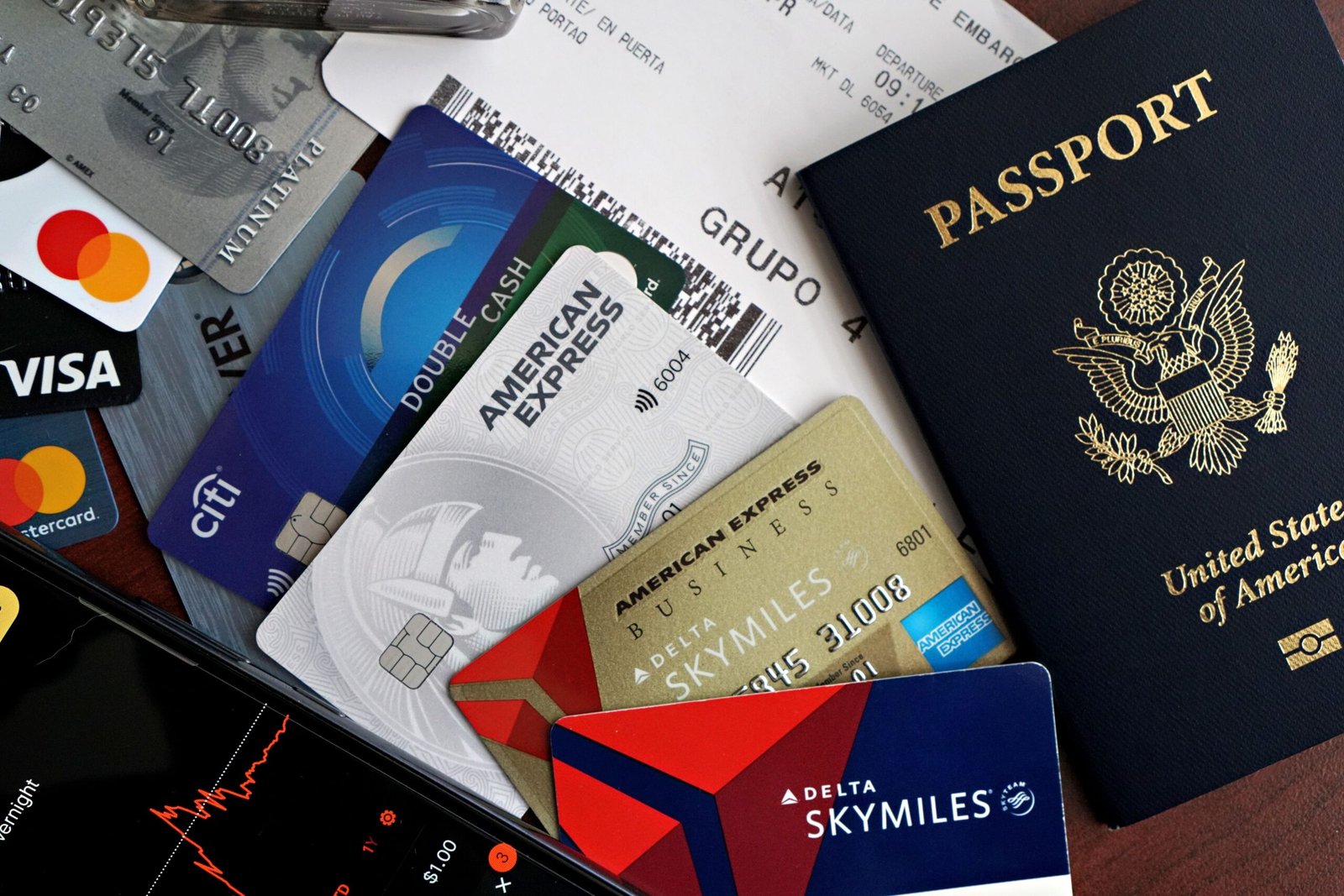
I remember the exact moment I realized I had been paying for flights like a sucker. I was sitting in a cramped middle seat, somewhere over Missouri, eating pretzels that tasted like salted cardboard and watching the guy in front of me recline into my kneecaps. The flight had cost me $487. I had paid it willingly, grudgingly, with my debit card like a person who simply accepted that airplanes were expensive and that was just life.
Then I started talking to the woman next to me. She was flying to the same wedding I was. She had booked the same route, on the same day, in a window seat. Her cost: $11, a twenty-two-dollar round trip. She had used points from a credit card she had signed up for six months earlier, a card she used to buy groceries and gas and the occasional overpriced coffee. She was not a travel hacker. She did not have a spreadsheet or a color-coded calendar or a YouTube channel explaining how to manufacture spending at office supply stores. She was just a normal person who had put her normal life on the right piece of plastic and let the math do the work.
I wanted that life. But when I got home and started googling, I immediately wanted to quit. The internet is full of people who treat credit card points like a competitive sport. They speak in acronyms. They argue about transfer ratios and sweet spots and fifth- Freedom routes. They make you feel like you need a graduate degree in airline alliances just to book a weekend in Chicago. You do not. If you are new to this, the best thing you can do is ignore 90 percent of what you read and start simple.
Here is the truth. A good travel credit card, used responsibly, is just a tool that turns money you are already spending into free flights and hotel rooms. That is it. There is no catch, provided you pay your bill in full every month. If you carry a balance, the interest will eat your rewards alive and then some. So before we talk about cards, we need to be clear about that. These cards are for people who treat them like debit cards. You spend what you have. You pay it off. The points are a bonus, not a loan.
If you can do that, the next step is picking a card that matches your actual life, not the life you imagine having. Most beginners fail because they pick a card designed for someone who flies twice a week when they actually fly twice a year. They pick a card with a huge annual fee and perks they will never use. They get overwhelmed by categories and transfer partners and end up using the card for six months before going back to their old bank card.
Do not do that. Start with one card. Use it for everything. Learn how it works. Then, if you catch the bug, you can optimize later. But for now, here are the cards that actually make sense for a normal person taking their first steps into the world of points and miles.
Chase Sapphire Preferred: The Gateway Drug
If there is one card that shows up on every beginner list, it is the Chase Sapphire Preferred. There is a reason for that. It is the perfect training-wheels card. It has a reasonable annual fee, usually around $95, which is low enough that you do not need to obsess over whether you are getting your money’s worth. It earns bonus points on travel and dining, which covers the two things most people spend money on when they are actually traveling. And it earns flexible points called Ultimate Rewards, which means you are not locked into one airline or one hotel chain.
The real magic of the Sapphire Preferred is that it teaches you how transferable points work without requiring you to become an expert on day one. You can book flights directly through Chase’s travel portal, which works a lot like Expedia or Kayak, and your points are worth a fixed amount there. It is simple. You see a flight. You pay with points. The price is the price. No blackout dates. No calling an airline and begging. Just a straightforward transaction.
Later, when you are ready, you can learn about transferring those points to airline partners like United or Southwest or JetBlue. That is where the real value lives, but it is also where the complexity lives. The Sapphire Preferred lets you ignore that until you are ready. It is like a video game that starts you on easy mode but has a hard mode waiting when you want it.
It also comes with surprisingly good travel protections. Trip cancellation insurance, primary rental car coverage, and baggage delay reimbursement. These are the kinds of things you do not think about until your bag is sitting in a different state than you are, and then they matter a lot. For a first travel card, it is hard to beat.
Capital One Venture: For People Who Hate Thinking
Some people love optimizing. They love checking which card to use at which store. They love tracking categories and quarterly bonuses and spending thresholds. Those people should get the Chase ecosystem and build a whole portfolio. But most people are not that person. Most people want to put one card in their wallet, use it for everything, and get a free flight once a year without doing math homework.
If that is you, the Capital One Venture card is probably your best friend. It earns two miles per dollar on every single purchase. Groceries. Gas. The random $4 charge for parking. The vet bill. Everything. Two miles per dollar. No categories to remember. No rotating bonuses to activate. No wondering whether this particular coffee shop counts as dining or as something else.
The redemption is equally simple. You book your travel however you want. Any airline. Any hotel. Any travel website. Then you log into your account and use your miles to erase the charge from your statement. It is clean. It is intuitive. It feels like getting a discount on your life rather than playing a game.
The annual fee is in the same ballpark as the Sapphire Preferred, around $95, and Capital One has been building out its transfer partner list so that if you do eventually want to get fancy, you can. But you do not have to. This is the card for the person who says, “I want to travel more, but I do not want a new hobby.” It is also a great card to keep forever, because that flat earning rate means it never becomes obsolete.
American Express Gold: For the Foodie
Let us be honest about something. Most points-and-miles advice is written by people who travel constantly for work. They spend a lot on flights and hotels, so they recommend cards that bonus those categories. But if you are a beginner who travels twice a year and spends most of your money on groceries and restaurants, a card that bonuses airfare is not helping you much.
The American Express Gold Card is not always labeled as a travel card, but for a certain kind of person, it is one of the best travel earners out there. It offers four points per dollar at restaurants and U.S. supermarkets, up to a generous cap. If you cook at home but also eat out, that is probably where most of your money goes. Those points add up fast, and American Express Membership Rewards points are among the most valuable and flexible currencies in the game.
The catch is the annual fee, which is higher, usually around $250. That sounds scary, but the card also comes with monthly dining credits and Uber credits that, if you actually use them, knock the real cost down significantly. If you live in a city where you use Uber Eats anyway, or you grab coffee at the right chains, the math can work out so that you are effectively paying a much smaller fee.
That said, this card is not for everyone. The credits require a little bit of attention. You have to remember to use them. If you are the kind of person who forgets to cancel free trials, the Gold Card might stress you out. But if you are organized enough to use a coupon, you are organized enough to handle this card. And the earning power is genuinely excellent for normal life spending.
Chase Freedom Unlimited: The True Beginner
Before you get any premium travel card, you might want to ask yourself whether you are ready for an annual fee at all. If you are not, or if your credit score is still building, or if you just want to dip a toe in the water without any pressure, the Chase Freedom Unlimited is the place to start.
It has no annual fee. It earns 1.5 percent back, or 1.5 Ultimate Rewards points per dollar, on everything. That does not sound as sexy as the bonus categories on other cards, but here is the secret: if you get a Sapphire Preferred or Sapphire Reserve later, you can combine the points from your Freedom Unlimited into that account. So that 1.5 percent back becomes 1.5 transferable points per dollar, which can be worth much more than 1.5 cents if you learn to use transfer partners.
Even if you never upgrade, it is a solid no-fee card. You earn points. You cash them in. It is simple. It builds your relationship with Chase, which matters because Chase has a rule called 5/24. If you open five or more personal credit cards from any bank in a twenty-four-month period, Chase will automatically deny you their cards. Starting with Chase early, before you go on a credit card opening spree, is a smart strategic move that most beginners learn about too late.
Wells Fargo Autograph: The Underdog
Everyone talks about Chase and Amex and Capital One. Nobody talks about Wells Fargo, which is a shame because the Autograph card is one of the best no-annual-fee options for travelers who are just starting out. It earns three points per dollar on travel, dining, gas, transit, and streaming. That covers a huge chunk of most people’s spending. There is no annual fee. There is no foreign transaction fee, which is rare for a no-fee card and crucial if you are actually leaving the country.
The downside is that Wells Fargo’s rewards ecosystem is not as robust as Chase’s or Amex’s. You are not going to transfer these points to Singapore Airlines and book a first-class suite. But for straightforward redemptions, statement credits, or booking through their portal, it is perfectly fine. Sometimes perfect is the enemy of good, and a no-fee card that earns triple points on gas and restaurants is genuinely good.
The Strategy: Pick One and Live With It
Here is where I am going to save you from yourself. Do not get three of these cards at once. Do not try to build a “trifecta” on week one. Do not watch a YouTube video about manufactured spending and open six cards in an afternoon. That way lies madness, missed minimum spending requirements, and a credit score that looks like a heart monitor during a panic attack.
Pick one card. Just one. The one that sounds like it fits your life. Use it for every purchase you can. Set it to autopay in full every month so you never pay interest. Learn how to log in and check your points balance. Learn how to redeem them for one trip. That is your entire job for the first year.
If you get the Sapphire Preferred, book one trip through the portal and pay with points. Feel how good it feels to not pay cash. If you get the Venture, take one flight, pay cash, and then erase the charge with miles. See how the math works. If you get the Freedom Unlimited, save up your points and take a statement credit when you need it. Build the habit. Build the confidence.
Once you have done that for a year, you will know whether this is a fun side benefit or a full-blown obsession. If it is the latter, then you can start learning about transfer partners and sweet spots and business cards and all the advanced stuff. But you do not need any of that to get a free flight to Florida or a discounted hotel in Denver. You just need one card and a little bit of discipline.
The Redemption Reality Check
A quick word about what your points are actually worth. If you are new, you will see headlines about people booking first-class flights to Tokyo for pennies. That is real, but it is not normal. It requires time, flexibility, and a willingness to learn complex systems. For your first redemption, aim for something simple and satisfying. A domestic round trip. A long weekend at a mid-tier hotel. A car rental for a road trip.
The value you get per point matters less at the beginning than the habit of using them. A point you redeem for a penny is worth more than a point that sits in your account for three years while you wait for the perfect deal. Do not let the perfect be the enemy of the good. Book the flight. Take the trip. Enjoy the fact that you paid less than the person in the middle seat next to you.
What Not to Do
I have made every mistake in this game, so let me save you some pain. Do not carry a balance. Ever. The interest rate on these cards will destroy your rewards and then some. Do not miss the minimum spending requirement for a sign-up bonus. That bonus is usually the most valuable part of the first year, so plan your spending. Do not apply for a card with a huge annual fee unless you have done the math and know you will use the perks. Do not let points expire. Do not hoard points forever, waiting for a mythical, perfect redemption. And do not, under any circumstances, let credit card points convince you to spend money you would not otherwise spend. A dollar saved is worth more than a point earned.
The Bottom Line
Travel credit cards are not magic. They are not a way to get rich or live a life of luxury you cannot afford. They are simply a way to stop leaving money on the table. You are already buying groceries. You are already filling your gas tank. You are already eating at restaurants and booking flights and staying in hotels. You might as well earn something back.
Start simple. Start small. Pick a card that matches your actual life, not your fantasy life. Pay it off every month. Take one free trip. Then decide if you want to go deeper.
The woman on that flight to Missouri changed my life, but not because she taught me some advanced trick. She just showed me that normal people could do this. That is all you need to know. The rest is just details.